

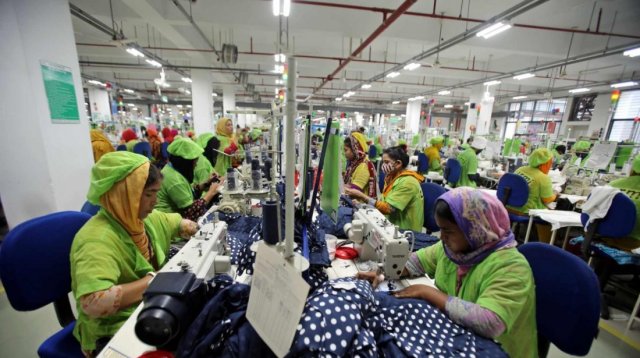

Bangladesh has once again overtaken China in ready-made garment exports to the US market. Taking advantage of the significant drop in Chinese exports due to the US administration’s counter-tariff policy, Bangladesh retained its position as the second largest garment exporter in February and March of this year. However, Vietnam retained its top spot in the market.
According to the latest statistics released by the Office of Textiles and Apparel (OTEXA), a division of the US Department of Commerce, the United States imported a total of $17.73 billion in ready-made garments in the three months from January to March 2026, which is 11.6 percent less than the same period the previous year.
During this period, Bangladesh exported $2.04 billion worth of ready-made garments to the United States. Although this is 8.38 percent less than the same period last year, Bangladesh has surpassed China to become the second largest exporter.
Meanwhile, China’s apparel exports fell by about 53 percent to $1.7 billion during the same period. The country exported $3.61 billion worth of apparel to the United States during the same period last year. Analysts say the sharp decline in Chinese exports is due to the impact of US counter-tariffs and trade restrictions.
Vietnam, which is in the top position in the market, exported ready-made garments worth $3.98 billion in the first three months of this year, which is about 2.73 percent more than the previous year. Currently, Vietnam’s share in the US apparel market is about 22 percent. Bangladesh has about 11.5 percent of the market.
At the same time, Indonesia’s exports fell slightly to $1.22 billion, while India’s exports fell significantly to $1.1 billion, down about 27 percent from the previous year.
According to analysts, the change in US tariff policy has created a new reality of competition among South Asian garment exporting countries. Initially, high countervailing duties were imposed on Bangladeshi products, but these were later reduced through bilateral agreements. As a result, Bangladesh has come into a comparative advantage compared to China and India.
However, exporters say that the pace of new orders is not as fast as before due to global inflation, rising energy costs and reduced consumer demand in the international market. In particular, the situation in the Middle East and the volatility of fuel prices are putting pressure on international trade.
Those involved in the ready-made garment sector believe that to maintain its position in the competitive market, Bangladesh needs to increase production capacity, diversify products, and further strengthen labor standards and environmental compliance.