


Trade tensions between the United States and China have once again escalated sharply. U.S. President Donald Trump has announced a 100% tariff on imported goods from China, set to take effect next month.
According to a BBC report, Trump made the announcement in a post on his social media platform, Truth Social, on Friday (October 10).
Trump stated that the United States “will no longer remain silent” in response to China’s unfair trade practices and its aggressive behavior in the technology sector.
He further added that the U.S. would impose new export restrictions on certain key software products.
Earlier, in another post on the same platform, Trump accused China of “holding the world hostage” by restricting the export of rare minerals, calling it a hostile act.
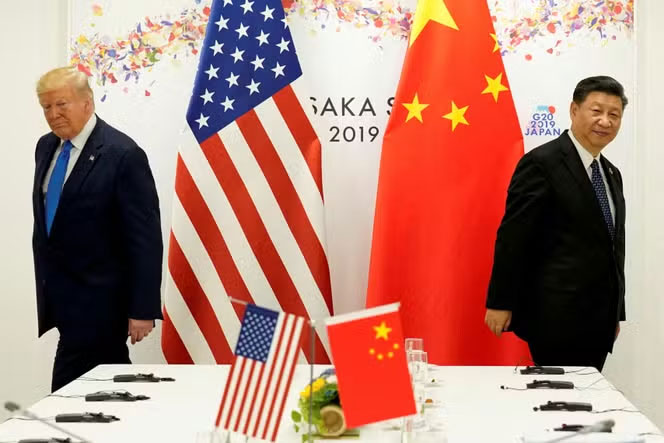
He also threatened to cancel a scheduled meeting with Chinese President Xi Jinping, though later clarified that the meeting was “not yet officially canceled.”
Following Trump’s announcement of new tariffs, U.S. stock markets saw an immediate decline, with significant drops in the technology and automobile sectors.
Analysts note that tensions have been rising since China tightened control over rare mineral exports—materials essential for the production of cars, smartphones, and other high-tech products.
Earlier this year, after Trump’s initial threats of new tariffs, Beijing restricted rare mineral exports, sparking concern among U.S. companies. Automaker Ford was even forced to temporarily halt production.
At the same time, China launched an antitrust investigation into U.S.-based tech giant Qualcomm, halting its acquisition of another chip manufacturer.
Recently, China also announced a new port fee on ships linked to the United States, affecting vessels operated by American companies.
Experts believe these developments signal the potential beginning of a new trade war between Washington and Beijing.