

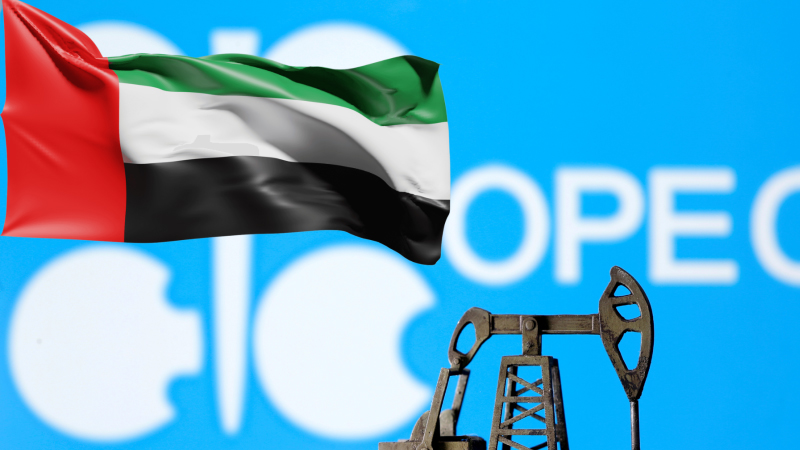

The announcement of the UAE’s withdrawal from the oil-producing alliance OPEC and OPEC Plus has created new uncertainty in the global energy market.
Analysts say the decision will not only affect the supply and price of oil, but also the future functioning of Middle East geopolitics and the OPEC alliance.
Experts say the UAE’s move comes at a time when the risk of regional tensions surrounding Iran and the threat of the Strait Strait has put pressure on the international energy supply system. In the meantime, the announcement of the departure of a large producer of a country’s alliance can increase volatility in the market.
This is a major strategic challenge for Saudi Arabia, which is headed by OPEC. Analysts say it may be difficult to keep oil prices stable if the alliance’s unity is weak in the production policy and market control.
The decision came amid rising security risks at Strait of Hormuz, one of the world’s most important energy transport routes. This system transports a large part of global crude oil and liquefied natural gas, so any volatility directly affects the global market.
The UAE has accused them of not being properly aware of their concerns in the regional security situation. According to observers, this dissatisfaction can play a role in the decision to leave the alliance. It also brought to the forefront of the Gulf alliance.
The Organization of the Petroleum Exporting Countries, established in 1960, has long played an important role in controlling global oil supplies. In this context, the UAE’s withdrawal is a sign of a major change in the future impact and decision-making process.
Market analysts fear the decision could further evaluate oil prices and put pressure on global inflation, energy consumption and economic growth.
Source: Al Jazeera