


Staff Correspondent
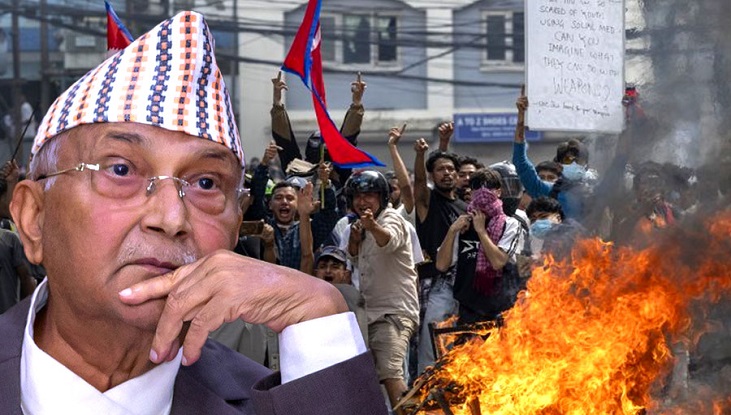
Facing massive public protests, Nepal’s Prime Minister KP Sharma Oli has resigned. On Tuesday (September 9), the country witnessed the second consecutive day of intense demonstrations. In the capital, Kathmandu, protesters defied curfew orders and continued rallies demanding the Prime Minister’s resignation. During the unrest, fires broke out at the President’s and Prime Minister’s offices, while protesters also set the Parliament building ablaze. Air traffic was temporarily suspended.
According to media reports, as the situation worsened, the Nepali Army used helicopters to evacuate ministers from the Vice President’s residence. Across the country, residences of ministers and senior officials were attacked and set on fire.
The main cause of the protests was the government’s decision, effective from September 4, to ban 26 social media platforms, including Facebook, WhatsApp, Instagram, and YouTube. What began as a peaceful protest on Monday (September 8) soon turned violent. Clashes broke out when protesters attempted to break police barricades and enter Parliament, leading police to disperse the crowds with batons.
Several ministers had already resigned under pressure from the unrest. Finally, amid growing public outrage, the Prime Minister also stepped down. Over the two days of clashes, at least 19 people were killed and many others injured. Protesters have dubbed the movement the “Gen-Z Revolution.