

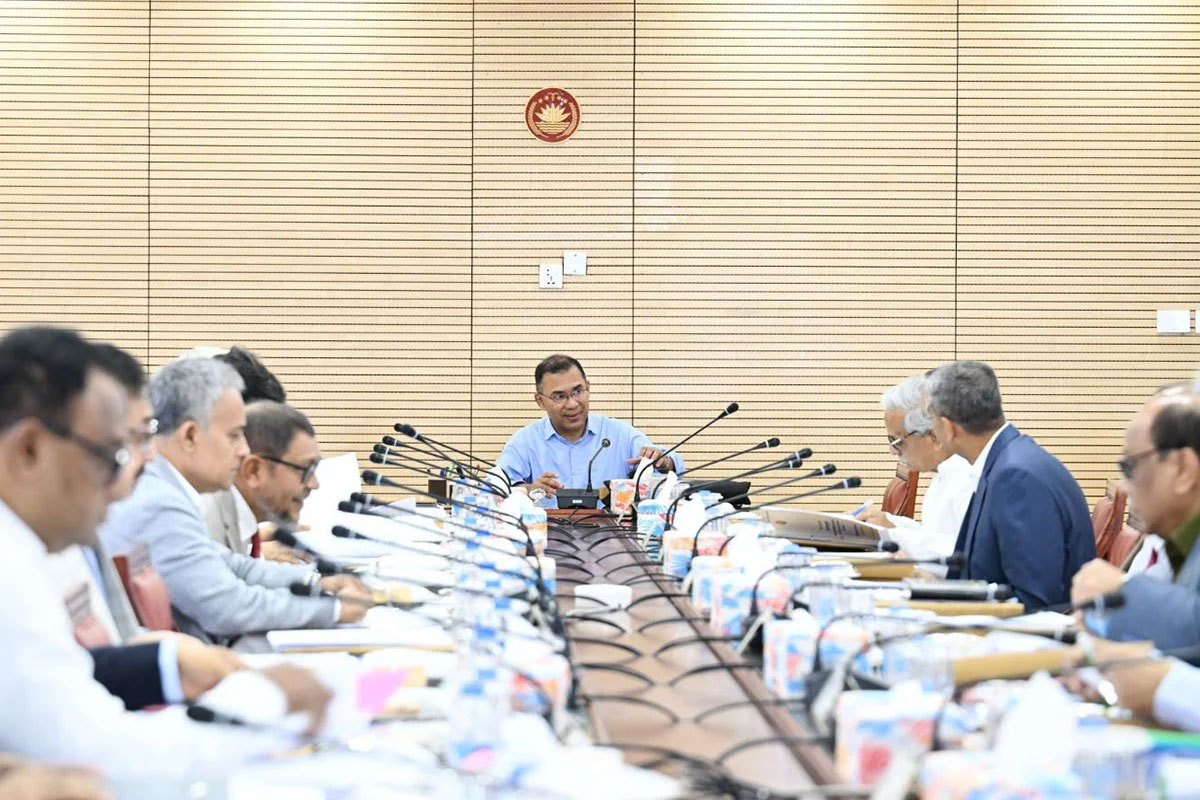

The Executive Committee of the National Economic Council (ECNEC) has given final approval to the much-discussed Padma Barrage project to alleviate the long-standing water crisis in the southwest and restore the normal flow of the river during the dry season.
The project was approved at a meeting held at the Secretariat on Wednesday with prime minister Tarique Rahman in the chair.
According to government sources, the total cost of the project has been fixed at Rs 33 thousand 474 crore-45 lakh. It is planned to be implemented in a phased manner from July 2026 to June 2023. According to the officials concerned, this can bring a big change in water management and agricultural production in the southwestern part of the country.
Under the project, the target of conserving about 290 crore cubic meters of water in the Padma River has been set. At the same time, the restoration activities of the Hisna-Mathabhanga, Garai-Madhumati, Chandana-Barasia, Baral and Ichhamati river systems will be carried out. The government expects this initiative to have a positive impact on the areas affected by the long-standing navigability crisis, water scarcity and salinity.
In the first phase, dredging and re-excavation will be done in the area of about 136 km of the Garai-Madhumati river and about 246 km of the Hisna river system. The barrage also plans to build fifteen spillways, navigation locks, fish passes and 36 decimal 6 MW power plants. A long aflux dam will also be built for the prevention of river flow and protect the surrounding areas.
If the first phase of the project is implemented, the people of at least nineteen districts of Khulna, Rajshahi, Dhaka and Barisal divisions will benefit directly. It is expected to have an impact on agriculture, fisheries, shipping and fresh water supply systems. Especially in the dry season, if the flow of water in the rivers increases, the irrigation system will also help in improving the irrigation system as well as maintaining the environmental balance.
According to the government plan, the second phase will include additional infrastructure construction as well as the restoration of several other river systems. The entire project area is spread over about thirty-seven percent of the country’s total territory, which includes sixteen upazilas in twenty-six districts.
According to experts, if the Padma Barrage project is implemented successfully, it could be a new momentum in the agriculture-dependent economy along with the long-term water crisis in the southwest. However, timely financing, maintaining environmental balance and ensuring good governance will also be a big challenge in the implementation of such a big project.