

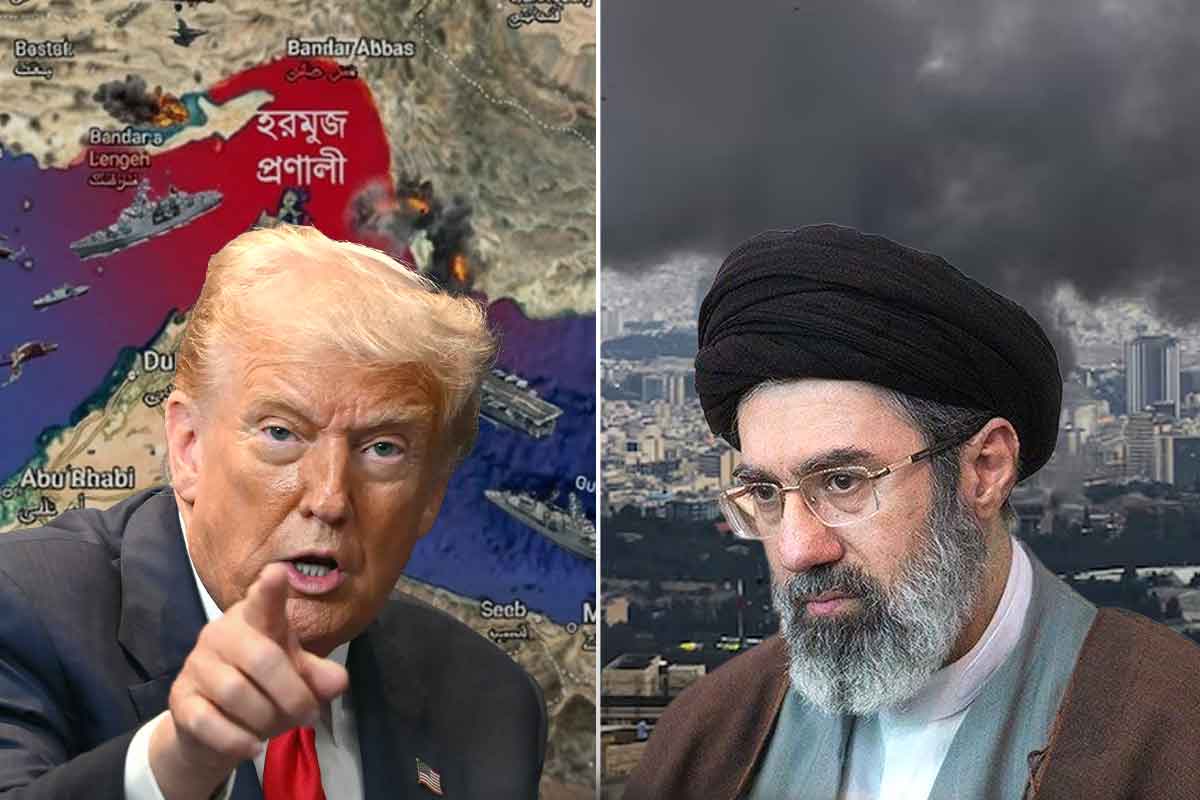

Tensions in the Middle East have reached a new level over the deadline set by US President Donald Trump. Tehran has hinted at the rejection of the ultimatum given to the opening of the Strait of Hormuz or to reach a new deal. Analysts believe that this could further complicate the situation.
According to experts, Iran will not only be in a defensive position if the deadline exceeds; rather, they can adopt strategies that are capable of transforming regional conflict into a global crisis. “Tehran can take the path of weakening the opposition economically and strategically by creating multi-dimensional pressure.
1. The Great Challenges of the Global Economy
One of the main routes for global energy supply, the Strait of Hormuz, could lead to a sudden rise in the international market if the Strait of Hormuz is paralyzed. Analysts have warned that if a major accident or tanker is damaged, the price of oil could reach close to $200 per barrel.
Besides, if the sea-boiled fiber optic cable is damaged, digital communication, banking and information flow between Europe and Asia can be severely disrupted.
2. Gulf energy and infrastructure at risk
Iran’s long-standing strategic position — “if you don’t,” could be important in this crisis. Energy and water infrastructure in Saudi Arabia, the United Arab Emirates and Qatar may be a potential target. This could lead to a water and electricity crisis in major cities in a short time.
3. The spread of cyber warfare
According to international reports, Iran has already increased its cyber capabilities. Important infrastructure—the risk of cyberattacks on the power grid, water supply, and even health system can increase. At the same time, the fear of accidents by interfering with the navigation system of the boat cannot be ruled out.
4. Enacting regional allies
Iran is expected to use its regional alliance. Hezbollah, the Houthi group in Yemen and various militia groups in Iraq-Syria could put pressure on multiple fronts. This puts the risk of further conflict.
5. Changes in the diplomatic balance
If Tehran builds alternative coordination with countries like China, Russia and Pakistan, it could break up the U.S.-led international alliance. This could lead to a new global diplomatic balance.
The purpose and reality of the conflict
According to analysts, Iran’s main goal is not a direct military victory; rather, it is to take the conflict to an expensive level where long-term pressure will be created for the opposition. If this strategy is successful, its impact will not only be limited to the Middle East—but the global economy, the energy market and the international security system can have a profound impact.
Although there is still scope for diplomatic solutions in the current situation, the uncertainty is increasing with the deadline approaching. Experts warn that any wrong action could quickly turn a regional crisis into a global disaster.