

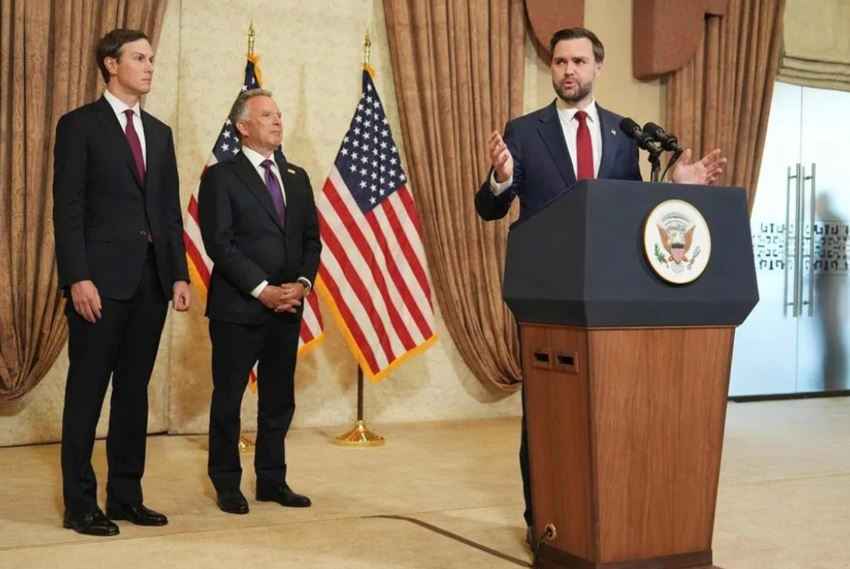

No agreement was reached after 21 hours of high-level talks between the United States and Iran in the Pakistani capital , Islamabad . The talks ended in uncertainty after failing to overcome differences on strategic and nuclear issues.
At a press conference on Sunday morning (April 12) after the talks, US Vice President JD Vance said that despite extensive discussions on important issues, no final agreement had been reached. He said, “There have been constructive discussions for a long time—that is a positive thing. However, we have not yet reached an agreement.”
He also said that the US delegation is returning home without any agreement. Stating that the US participated in the talks with “good intentions”, Vance said that Washington sat in the dialogue with a flexible position, but it was not possible to eliminate the differences in mutual positions.
According to Vance, the US has presented a “final and best offer” to Iran, which is now under Tehran’s consideration. “We have provided a clear framework – now it remains to be seen whether Iran accepts it or not,” he said.
According to Qatar-based media outlet Al Jazeera , the talks, known as the ‘Islamabad Dialogue’, began on Saturday afternoon and continued until Sunday.
Vance made it clear at the press conference that the United States had set its “red lines” and made it clear to Iran what was acceptable and what was not. However, the Iranian delegation did not accept those conditions.
At the start of the talks , Vance praised Pakistani Prime Minister Shahbaz Sharif and Army Chief Asim Munir . He said that if there were any shortcomings in the talks, it was not because of Pakistan; rather, Islamabad had sincerely tried to build bridges between the two sides.
At the heart of the dispute is Iran’s nuclear program. The United States demands that Iran make clear commitments that it will never develop nuclear weapons or seek to acquire such a capability. However, Vance acknowledged that no such assurances have been forthcoming.
He added, “Our goal was to get a credible commitment from Iran. Although that commitment has not yet been seen, we hope it will be possible in the future.”
Analysts say the long-running talks, while not producing any immediate results, have laid the groundwork for future dialogue. However, deep mistrust over the nuclear issue, regional influence and security concerns is seen as limiting the chances of rapid progress.