

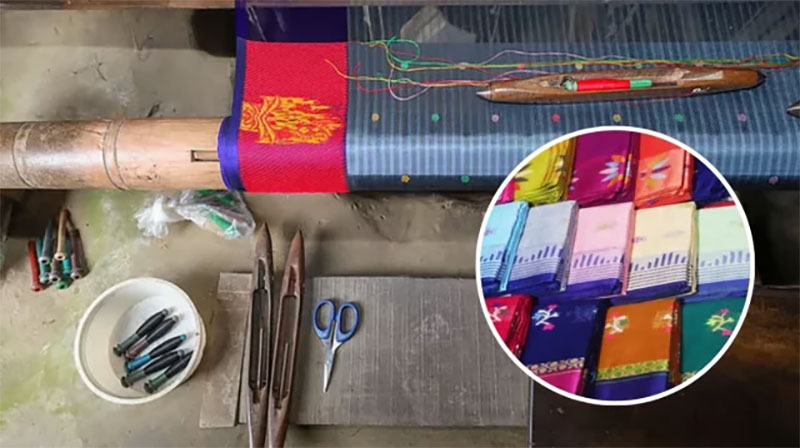

Bangladesh’s famous Tangail sari weaving industry has been included in UNESCO’s list of Intangible Cultural Heritage . The decision was unanimously taken at the 20th meeting of the Intergovernmental Committee of the UNESCO 2003 Convention held in New Delhi on Tuesday.
This is Bangladesh’s sixth single registration, and the country’s second inclusion in four years after being elected to the board.
Ambassador Khandaker M Talha, head of the Bangladesh delegation and Permanent Representative of Bangladesh to UNESCO, described the recognition as “an extraordinary honor for Bangladesh.” He said that the art of the weavers of Tangail for more than two centuries has brought this international recognition. He also said that the Tangail saree, the daily wear of Bangladeshi women, has played an important role in spreading this tradition.
Ambassador Talha, who is currently the President of the UNESCO General Assembly, dedicated the achievement to all the weavers and women of the country. He added that many cultural elements of Bangladesh deserve international recognition, and with documentation and capacity building, more heritages could be included in the UNESCO list in the future.
Before Tangail Saree, Bangladesh received UNESCO recognition for
Baul Music (2008), Jamdani (2013), Mangal Shobhajatra (2016), Shital Pati (2017) and Dhaka Rickshaw-Chitra (2023).