

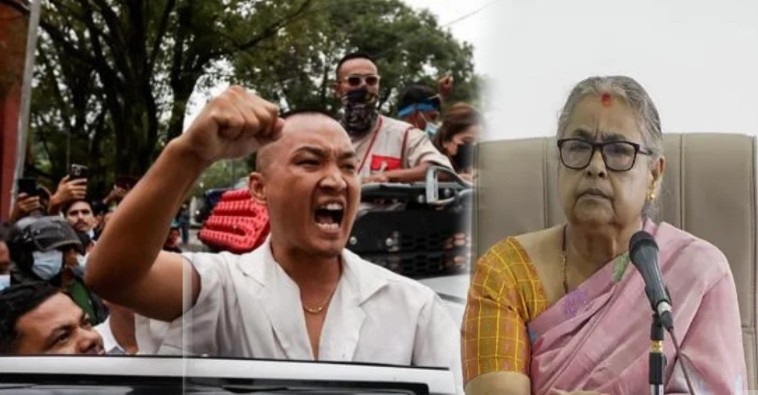

Nepal’s streets have erupted once again. On Sunday night, Gen-Z protesters staged a demonstration in front of the Prime Minister’s official residence in Baluwatar, Kathmandu, demanding the resignation of interim Prime Minister Sushila Karki.
The protest, led by youth icon Sudan Gurung, stemmed from anger over cabinet appointments. Demonstrators alleged that although Karki rose to power through their movement, their voices were ignored in the distribution of key ministries.
The presence of families of those killed and injured in recent protests intensified the atmosphere, as they demanded swift justice. Gurung issued a sharp warning, saying that if youth concerns continued to be neglected, they would return to the streets with tougher programs.
After assuming office, Karki appointed Om Prakash Aryal as Home Minister along with several other key ministers. However, Gen-Z protesters denounced Aryal’s appointment as a product of “backroom deals,” sparking widespread public outrage. The choice of a controversial figure for such a sensitive post relating to peace and security has further fueled discontent.
Political analysts warn that if the rift between the Gen-Z movement and the interim government remains unresolved, Nepal’s politics could sink deeper into uncertainty. Youth protests may intensify, while the government might adopt a harsher stance—together pushing the nation toward greater instability.
Experts emphasize that the only way to ensure stability is through urgent dialogue and compromise. Without it, Nepal’s political stage may soon face yet another storm.