

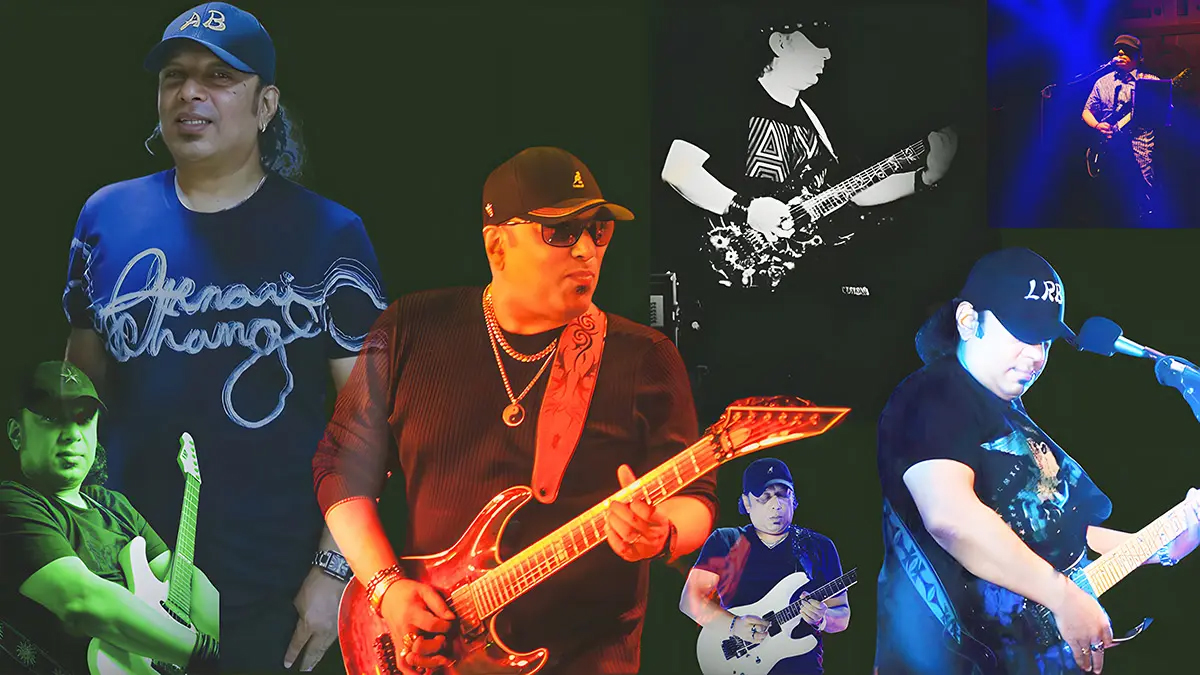

A major controversy has arisen around the “Uttaradhikar” project and the proposed “Ayub Bachchu Museum” based on the songs of the legendary Ayub Bachchu and his legendary band LRB.
Although a No Objection Certificate (NOC) was sought from the songwriters by a third party for the project, it has been alleged that the songs were remade without any specific agreement or legal permission. Which is completely voidable.
In this context, six renowned lyricists of the songs of the late Ayub Bachchu – Bappi Khan, Latiful Islam Shibli, Zayed Amin, Angel Shafiq, Niaz Ahmed Anshu and Ahmed Shafi Chowdhury-Prateek have expressed their strong and clear position through a joint statement on behalf of the late Kawsar Ahmed Chowdhury.
The songwriters have clearly stated that they have not given any NOC or license for any of the songs used in the “Uttaradhikar” project and will not give any in the future. It is completely illegal to commercially reproduce a song without informing the authors of the other half (lyrics) on the pretext of owning half of it (tunes and music). Therefore, all legal and financial responsibilities for the songs used in the project lie with the organizers, Ayub Bachchu’s family (wife Ferdous Akhter Chandana), Ayub Bachchu and AB Kitchen. The songwriters have no involvement in this.
Out of deep respect for Ayub Bachchu and his musical creation, the songwriters are refraining from taking strict legal action for the time being. However, they have warned that their silence or restraint should not be seen as “consent”, “approval” or “waiving of rights”. As songwriters, they retain their individual legal rights over each song they write. They have the right to approach the court at any time if necessary.
At the same time, while they welcomed the idea of creating a permanent museum to preserve the memory of Ayub Bachchu in principle, they raised questions about the commercial and fundraising process behind it. They made it clear that they would not support or participate in initiatives in the name of a museum until the financial transparency, proper governance and full accountability of the fund-raising institutions or individuals are ensured. The songwriters strongly protested against the use of the artist’s vast creative output for commercial purposes under the pretext of revenue collection only.
The songwriters expressed their grief in a joint statement, saying that Ayub Bachchu was not just a composer or artist, but was their colleague and an integral part of their musical journey. However, showing love and respect for him does not mean that the songwriters will give up their legitimate rights. They have called on the relevant parties to respect the rights of the songwriters, demanding separate commercial licensing and royalties for each song under specific terms and conditions.
At the end of the statement, Bappi Khan gave a strong message on behalf of the lyricists—”Our position is very clear: our restraint is goodwill, not permission; respect, not surrender; and not taking legal action at this stage does not mean giving up our legal rights.”