

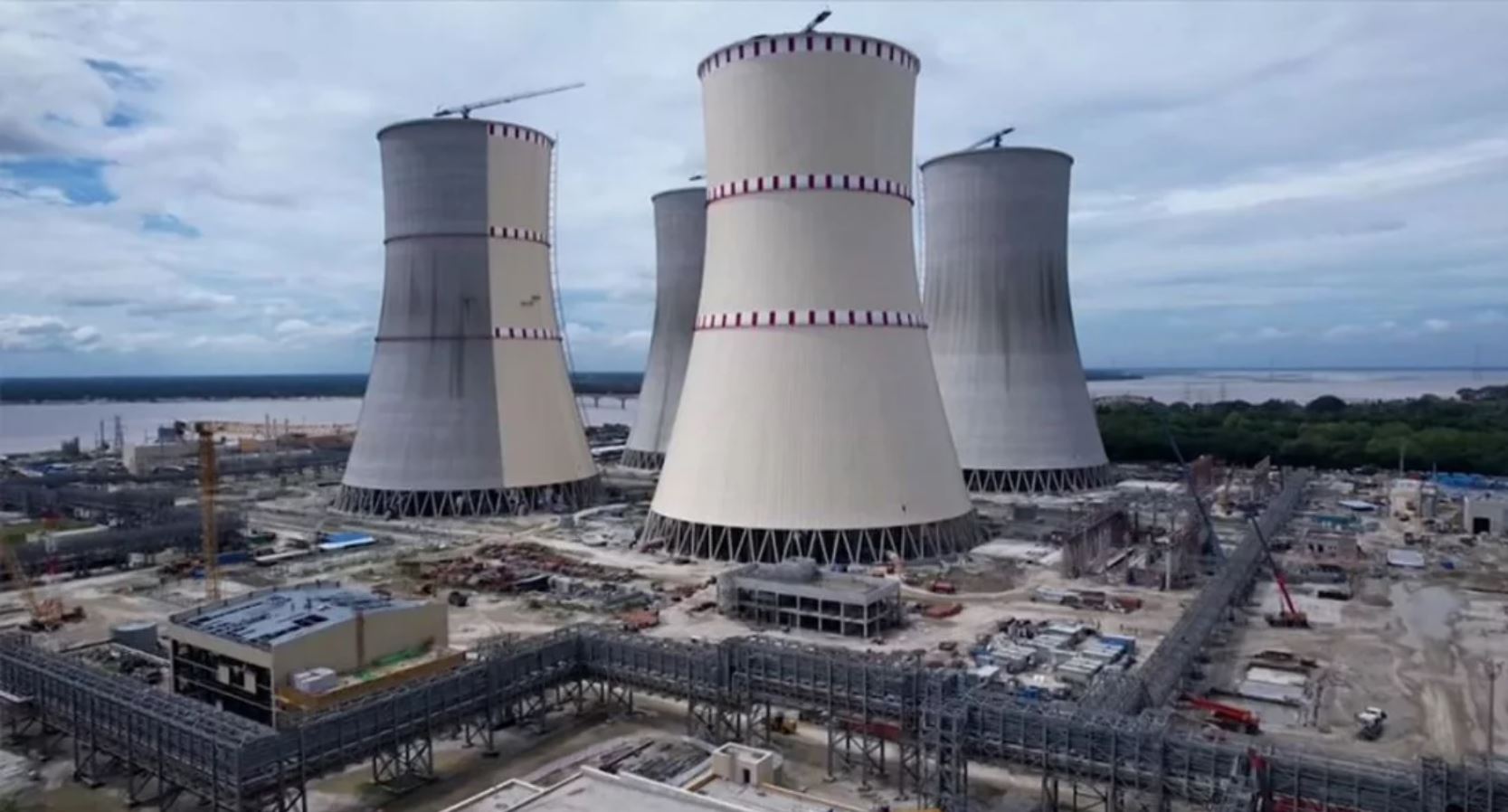

After long preparations, infrastructure construction, and technical capacity building, fuel (uranium) loading activities are officially beginning at the first unit of the country’s first nuclear power plant, Rooppur Nuclear Power Plant, today.
Through this, Bangladesh is going to reach a new milestone in entering the era of nuclear power generation.
Government sources said that after receiving the commissioning license from the Bangladesh Atomic Energy Regulatory Authority on April 16, the necessary preparations have been completed. The program will start with an inauguration ceremony on Tuesday afternoon.
Alexey Likhachev, Director General of the Russian state nuclear agency Rosatom, is scheduled to arrive in Dhaka with an 18-member delegation to attend the program. He will meet Prime Minister Tarique Rahman and then go to the Rooppur project area. The
Minister of Science and Technology and high-level representatives of Bangladesh and Russia will be present at the inauguration ceremony.
The officials concerned said that the fuel loading schedule has been postponed several times due to delays in meeting international safety guidelines and technical conditions. However, now the first unit is completely ready. 59 Bangladeshi experts have already received operating licenses to participate in this program.
According to the Ministry of Science and Technology, it will take about 45 days to complete the fuel loading process. If progress goes according to plan, 300 MW of electricity from the first unit can initially be added to the national grid by the end of July or early August.
In the next phase, when production starts at full capacity, 1,200 MW of electricity will be available from the first unit. If two units are commissioned, the total production will be 2,400 MW.
The Rooppur Nuclear Power Plant project has cost about 12.65 billion US dollars. The plant, built with Russian assistance, uses VVER-1200 Reactor technology, which is considered a modern safety standard reactor.
The fuel loading activities are seen by those concerned as a strategic advance in the country’s energy security, industrialization and long-term power supply system.