

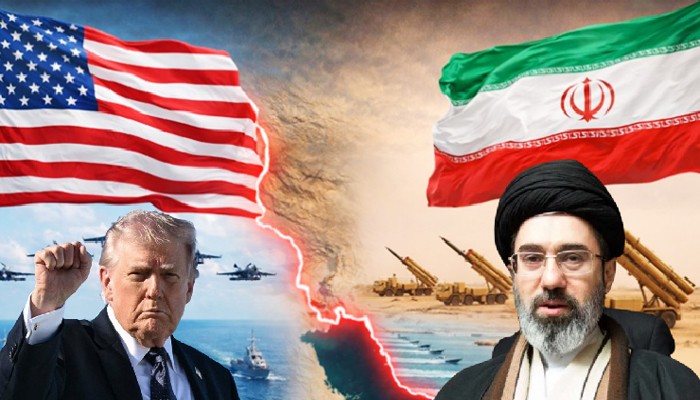

Diplomatic tensions between the United States and Tehran over Iran have reached new heights. While talks to defuse the ongoing tensions continue, the tough stances of both sides are further complicating the situation. The geopolitics of the Middle East have been further complicated by the peace proposals and counter-conditions.
According to various international media outlets and Iran’s semi-official Fars News Agency, the United States has set several tough conditions for Iran, including handing over its stockpile of about 400 kilograms of enriched uranium to the United States. At the same time, Washington has made it clear that no compensation will be paid for the economic losses Iran has suffered due to past sanctions.
The reports also said that the United States has offered to significantly limit the scope of Iran’s nuclear program. Under the terms, Iran may be allowed to operate only one nuclear facility in the future. In addition, the demand for the partial release of Iran’s assets and foreign exchange reserves frozen abroad has also been effectively rejected.
The United States has also linked the security situation in the Middle East to the talks. However, Israeli sources claim that even if Iran accepts these conditions, Washington is not guaranteeing that the threat of a military attack will be completely eliminated.
The US position has been sharply criticized by Iranian media and political circles. An analysis by the semi-official Mehr News Agency said that what could not be achieved militarily, the US is now trying to achieve through diplomatic pressure.
On the other hand, Iran has also set its own conditions for the talks. Tehran’s demands include an end to Israeli attacks on Hezbollah in Lebanon, the lifting of all economic sanctions against Iran, the return of funds seized in international banks, compensation for war damages, and international recognition of Iran’s sovereign control over the Strait of Hormuz.
Iranian Parliament Speaker Mohammad Bagher Qalibaf warned that Tehran’s response would not be limited to diplomatic measures if its proposal was ignored, while Iran’s military warned that any new attack would be met with a harsher and more comprehensive response.
Meanwhile, Iranian Foreign Ministry spokesman Esmail Baghai criticized the United States, saying that Washington is using diplomacy as part of a political and military strategy.
It is worth noting that the situation in the Middle East became more heated after the joint attack by the United States and Israel on February 28. Later, a temporary ceasefire came into effect on April 8 with the mediation of Pakistan, but there has been no sign of a permanent solution so far.