

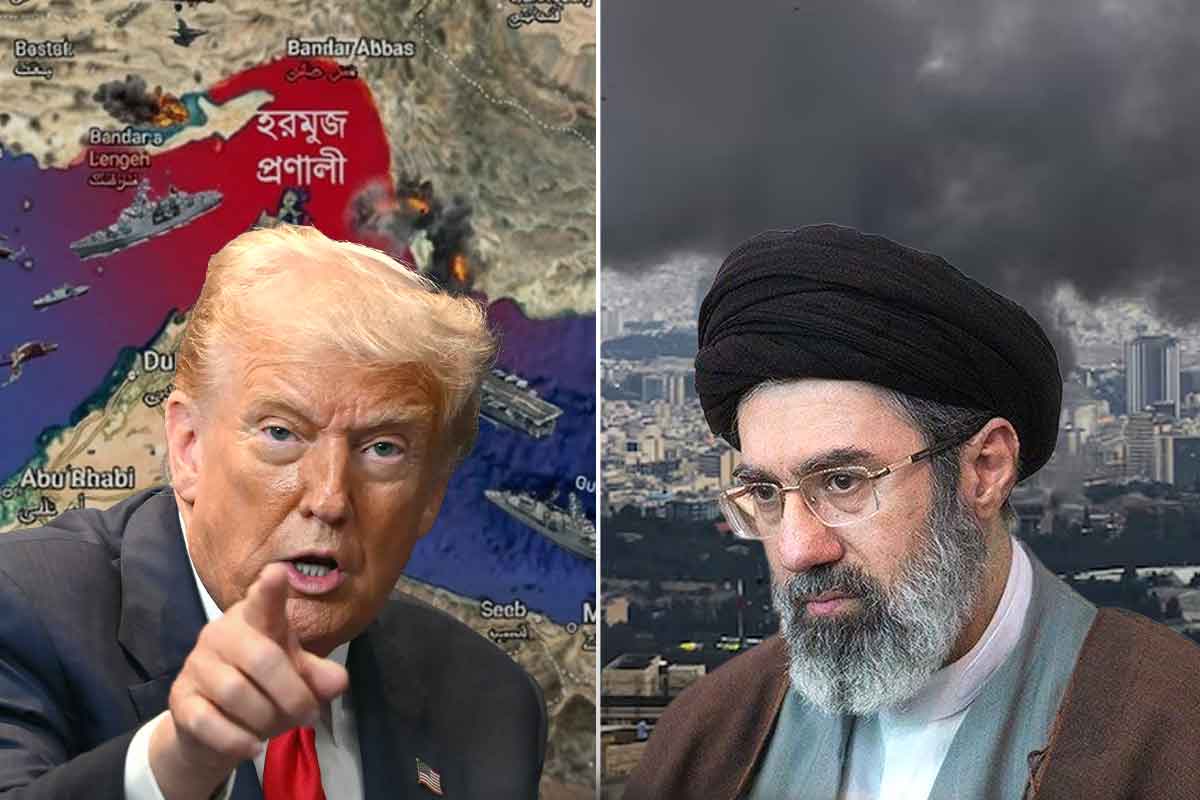

US President Donald Trump has defended a “best” and a “lasting deal” with Iran amid the ceasefire and diplomatic efforts in the Middle East. At the same time, he made it clear that the United States does not want to rush into negotiations; rather, a lasting solution is Washington’s priority.
Speaking to reporters at the White House, Trump said Tehran was interested in the deal, but the United States did not feel pressure to reach an agreement quickly. “Immediate agreement” is not an effective and long-term structure.
Responding to a question on nuclear weapons, Trump said the U.S. is capable of achieving conventional military capabilities and not questioning the use of nuclear weapons. He also described it as a political position.
Contracts and pressures—two strategies together
According to analysts, Trump’s speech includes two types of messages at the same time — a sign of keeping the door open for dialogue on the one hand, while maintaining the elements of military pressure. Trump said in his comments on Iran’s military capabilities that the United States was ready to react quickly if necessary.
He said that while Iran tried to rebuild some powers during the ceasefire, it was not a major strategic hurdle for the United States. Many people see this as part of the pressure before the discussion.
The importance of regional
In the context of the expansion of the ceasefire on the Israeli-Lebanon border, Trump’s comments have become linked to the Middle East’s larger security equation. According to observers, Washington is now trying to remain active in both military positions and diplomatic dialogues to control the regional conflict.
The uncertainty of a long-term contract
Although the “Best Agreement” is mentioned, there is no clarity on what kind of structure or conditions the United States wants such an agreement. Tehran’s reaction is also becoming more important.
According to international relations analysts, the message of not seeking a quick deal is tightening the position of the United States, on the other hand, creating new uncertainty about the timing of the negotiations.
Now, it is the focus of Iran to discuss the message as an opportunity to talk, or a new tensions. Because, in the current situation of the Middle East, every signal of diplomacy can have a multidimensional impact.