

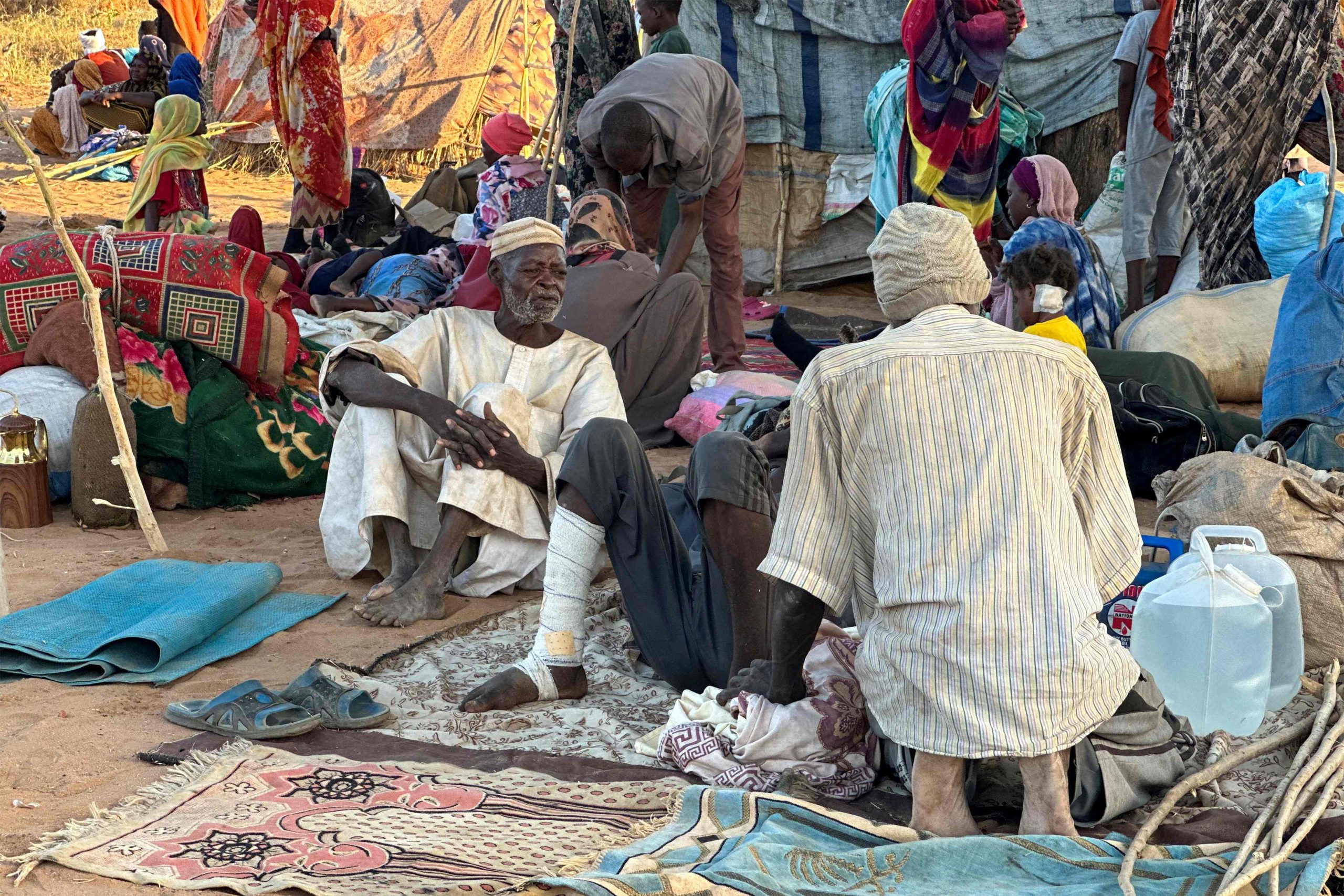

In two years of devastating civil war, more than 150,000 people have been killed in Sudan. The conflict between the Sudanese Army and the paramilitary Rapid Support Forces (RSF) began in April 2023, plunging the nation into chaos. According to the United Nations, Sudan is now facing the world’s worst humanitarian crisis — famine is spreading, and about 12 million displaced people are fleeing toward an uncertain future.
Background of the Conflict
Sudan’s instability began after the 2019 overthrow of President Omar al-Bashir, who ruled for three decades. Following his fall, the military and civilian groups formed a joint transitional government. However, another military coup in October 2021, led by General Abdel Fattah al-Burhan (head of the army and current president) and General Mohamed Hamdan Dagalo (Hemedti), commander of the RSF, toppled that government.
From Allies to Rivals
The two generals, once allies, turned against each other over plans to integrate RSF fighters into the regular army and disputes over leadership. In April 2023, the situation exploded into a full-scale civil war.
Who Are the RSF?
The RSF was formally established in 2013, evolving from the notorious Janjaweed militia accused of widespread atrocities during the Darfur conflict in the 2000s. President Bashir had legitimized the group, and under Hemedti’s leadership, it grew into a powerful force controlling Sudan’s lucrative gold mines and gaining influence through involvement in Yemen and Libya’s wars.
The Battlefield
Currently, the north and east of Sudan are under army control, while the west and south, particularly Darfur and Kordofan, remain dominated by the RSF. The capital Khartoum lies in ruins due to relentless fighting.
Atrocities in Darfur
The RSF has been accused of massacres and sexual violence following the capture of El-Fasher in Darfur. According to the UN and Human Rights Watch, the group targeted Masalit and other non-Arab communities, carrying out killings, rapes, and ethnic cleansing.
UN investigations revealed that RSF soldiers told victims, “We will give you Arab children,” indicating the deeply ethnic nature of the violence.
Risk of a Second Partition
The RSF now controls much of the country and is reportedly preparing to declare its own government — raising fears that Sudan could split again, as it did in 2011 when South Sudan became independent.
Economic Collapse and Humanitarian Crisis
Once one of Africa’s largest and most resource-rich nations, Sudan’s economy has collapsed amid the war. Government revenue has dropped by 80%, and per capita income has fallen to just $750. Food, medicine, and shelter are in dire shortage.
UN Warning
The United Nations warns that unless the conflict ends soon, Sudan’s humanitarian disaster could extend beyond Africa and become a global crisis.