

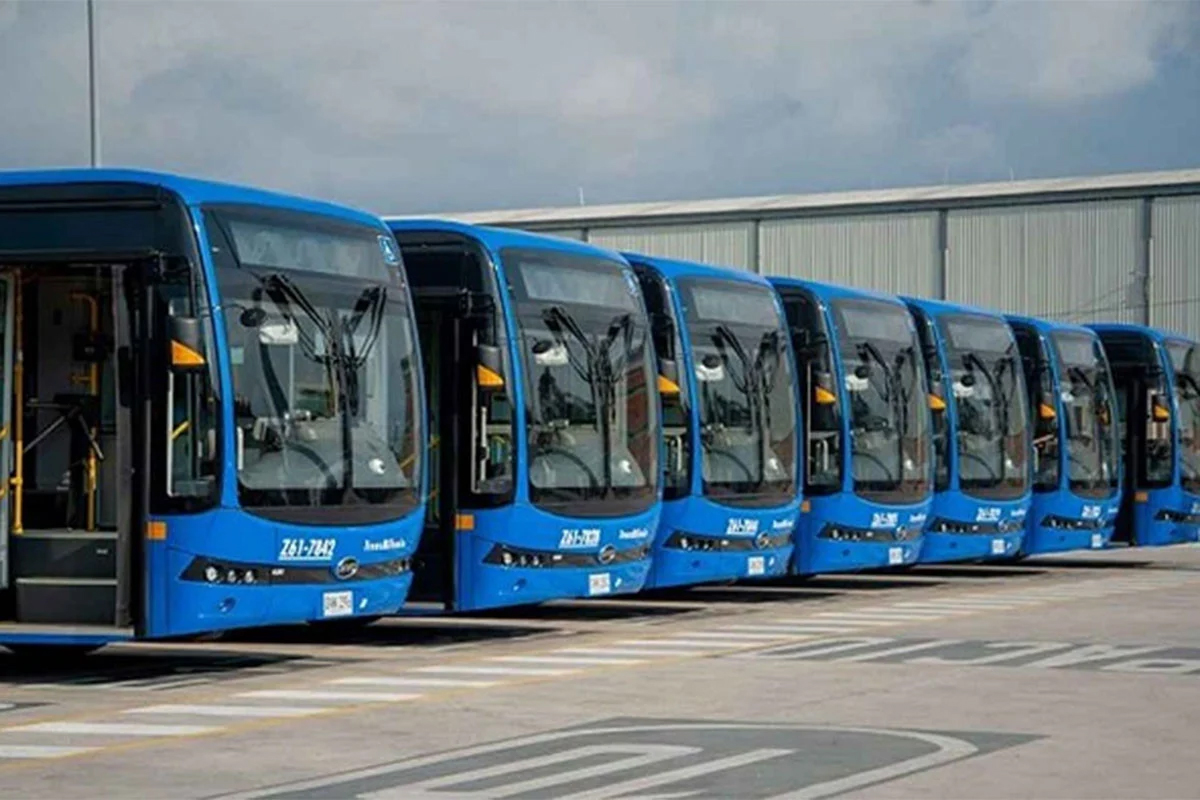

The government has taken a big plan to introduce about one thousand electric (EV) buses to make the country’s public transport system modern, environmentally friendly and sustainable.
At the same time, the feasibility of building universal EV charging infrastructure across the country and the introduction of monorails on the necessary routes is also being assessed.
Secretary of Road Transport and Highways Department Dr. Mohammad Ziaul Haque said a number of projects are being implemented to make the transport sector cleaner, safer and efficient by reducing dependence on fossil fuels.
A project to buy five hundred electric buses is currently underway. In addition, with the help of South Korea, initiatives have been taken to increase the number of buses by correcting the project of collecting 300 EV buses. At the same time, the World Bank is waiting for approval of the purchase of more than four hundred electric buses.
The government has added two separate purchase packages of Rs 400 crore to speed up the procurement process. The program also plans to operate more than a hundred special electric buses for women passengers.
If all the projects are implemented, about one,400 electric buses will be added to the country’s public transport system. At least two hundred EV buses will be available on some of the selected routes in December or early next year.
A uniform quality charging station network is being set up across the country to make EV bus operations effective. The BRTC will set up charging stations on its own land in sixty-four districts of the country. Private operators will also be able to use these stations if they have additional capacity.
A committee is working with BUET and MIST experts to formulate uniform technical standards for electric buses. It will determine the quality of battery, charging technology and maintenance. In the future, these criteria will also be expanded to electric minibuses and trucks.
Besides, the government is exploring the possibility of launching monorails on the routes where the metro rail is not suitable. BUET has been given the responsibility of possible root and technical evaluation.
There are plans to provide tax exemption and financial incentives to encourage private transport owners to invest in electric buses. At the same time, the subsidy and fare structure is being discussed with the finance ministry to bring a balance between the relatively high cost of EV buses and affordable fares for passengers.
As part of the government’s long-term plan, the initiative to control battery-powered three-wheelers, improve highway management and overall modernization of the transport sector will continue.