

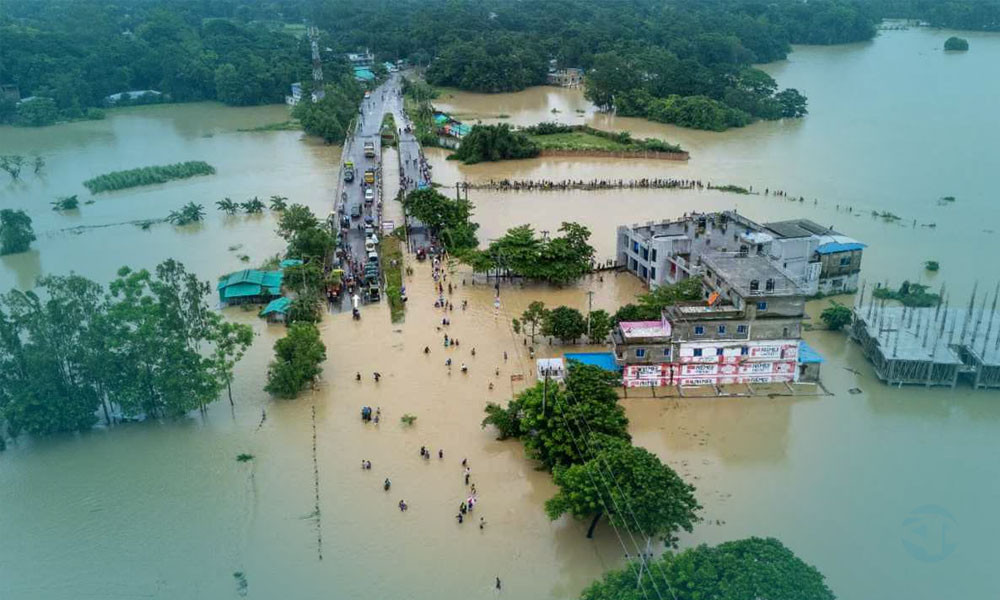

The flood and landslide situation in the southeastern part of the country is still worrying. According to the latest information from the Ministry of Disaster Management and Relief, 54 people have died and at least 39 have been injured in the disaster so far. At the same time, 155,311 families in seven districts are still trapped in water.
The ministry’s updated report released on Monday (July 13) said that a total of 609,411 people have been affected in various ways due to floods and landslides. The districts of Khagrachari, Rangamati, Bandarban, Cox’s Bazar, Chittagong, Moulvibazar and Habiganj have been the most affected. 59 upazilas, 334 unions and 12 municipalities in these districts have been affected by the floods.
According to district-wise data, the highest number of deaths occurred in Cox’s Bazar, where 31 people died. In addition, 13 people died in Chittagong, six in Bandarban, three in Rangamati and one in Moulvibazar. Among the injured, 24 people were in Cox’s Bazar, 12 in Chittagong, two in Bandarban and one in Khagrachari.
The government has opened 1,042 shelters for the affected people to provide safe shelter. Currently, 38,422 people have taken shelter in these centers, according to the Ministry of Disaster Management and Relief.
To ensure continuity of healthcare services in the flood situation, all leave of doctors and health workers in the 11 affected districts has been cancelled. In addition, medical teams have been deployed in each affected upazila and arrangements have been made to supply necessary medical supplies.
Health Minister Sardar Md. Sakhawat Hossain Bakul said that the government is giving top priority to ensuring healthcare in flood-hit areas. He said that necessary medicines, food, saline, antivenom and other medical supplies are being quickly delivered to the field level. At the same time, special healthcare activities are being conducted in Chittagong, Cox’s Bazar, Bandarban, Rangamati, Khagrachhari, Feni, Noakhali, Laxmipur, Chandpur, Comilla and Brahmanbaria.
In addition, senior doctors have been assigned the responsibility of monitoring the health situation in each district, and the control room of the Ministry of Health is monitoring and coordinating the situation around the clock.