

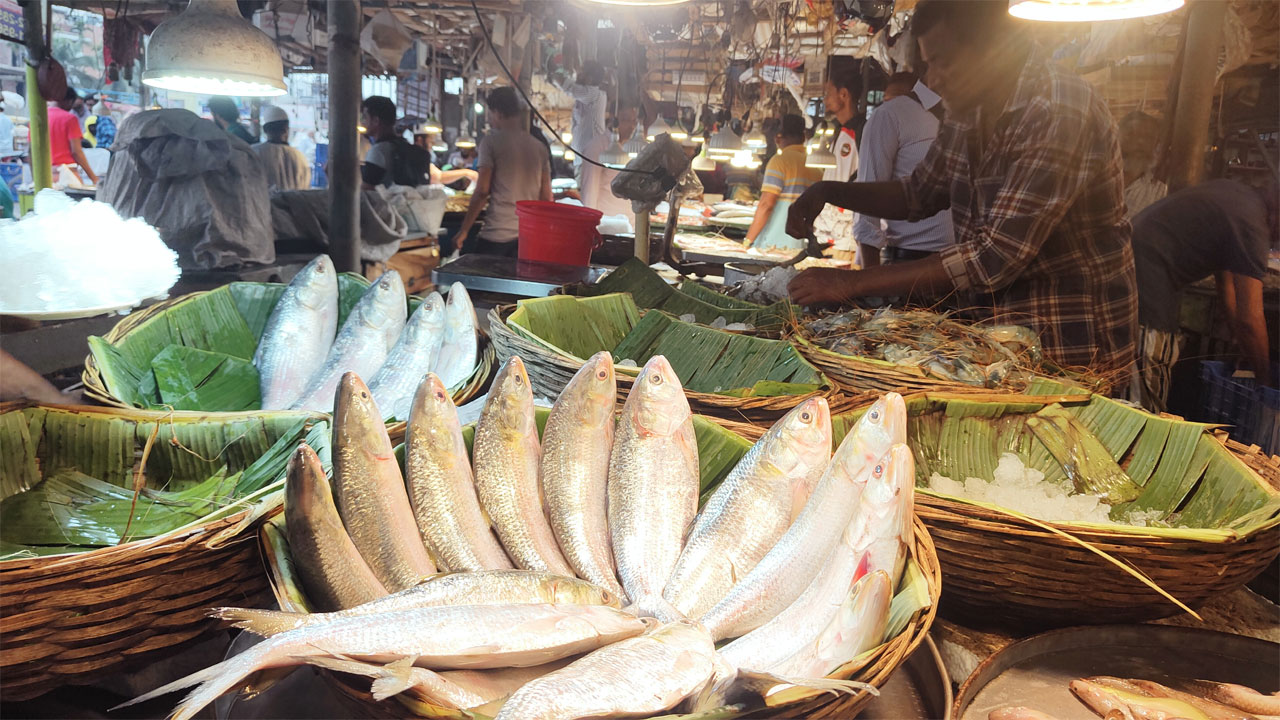

Hilsa, Bangladesh’s national fish, has long been a beloved delicacy. However, this year its skyrocketing price has turned it into a luxury item for many. Compared to last year, the price per kilogram has increased by Tk 600–800 on average. Currently, hilsa weighing over 1.5 kg is being sold at Tk 2,600–3,000, whereas last year it was a maximum of Tk 2,000.
A recent study by the Bangladesh Trade and Tariff Commission (BTTC) identified 11 key reasons behind the price surge. These include: dominance of the dadon (advance loan) system, imbalance in supply and demand, illegal stockpiling by profit-hungry syndicates, rising fuel and transport costs, increased fishing expenses, river navigability crisis, use of illegal nets, lack of alternative employment, fishing during ban periods, influence of middlemen, and export pressures. Experts argue that artificial shortages created by traders are the major reason behind the instability.
Although the government has permitted the export of 1,200 metric tons of hilsa to India for Durga Puja, exporters are reluctant as local market prices are much higher. In Bangladesh, hilsa is being sold for up to Tk 3,000 per kg, while the export price has been set at just Tk 1,533 per kg, making exports less profitable.
To stabilize the market, the BTTC recommended several measures: forming fishermen’s cooperatives to sell directly to wholesalers, establishing online platforms to cut out middlemen, setting up government-run distribution centers in major cities, building cold storage facilities, making registration and licensing mandatory for wholesalers and commission agents, and ensuring fair profit margins.
BTTC Chairman Moinul Khan said, “Hilsa is a 100% domestic product, yet its market is being artificially manipulated. The manipulations of the dadon system are the primary cause of price hikes.”
Farida Akhtar, Adviser to the Ministry of Fisheries and Livestock in the interim government, admitted the government’s failure to control prices, saying, “We are researching to identify the real problems so that people can enjoy hilsa at an affordable price.”
Local fishermen also blamed the dadon system. Emadad Hossain, a fisherman from Bhola, said, “The dadon traders destabilize the hilsa market by illegal stockpiling. If this practice is stopped, the market will stabilize quickly.”
According to the Bangladesh Bureau of Statistics (BBS), hilsa accounts for nearly 12% of the country’s total fish production and contributes about 1% to the GDP. Every year, around 600,000 tons of hilsa are caught, most of which come from the sea.
👉 Overall, curbing middlemen’s manipulation and eliminating the dadon system are seen as the most crucial steps to bring stability to the hilsa market.