


Staff Correspondent
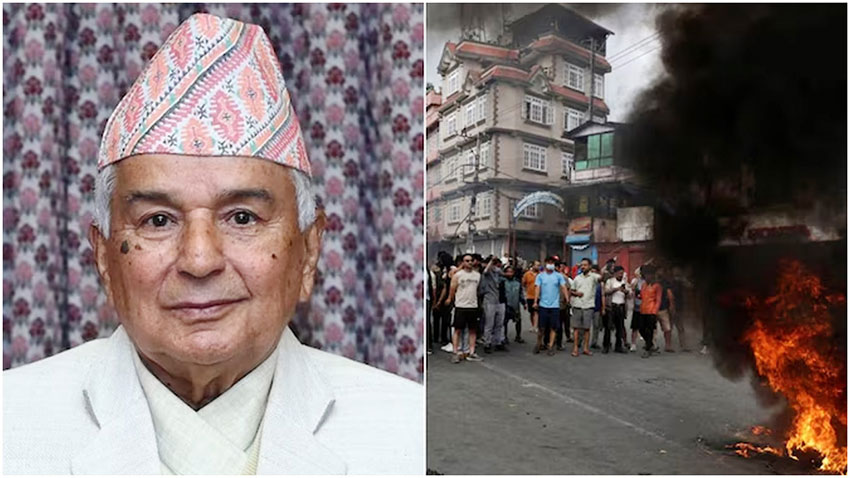
Nepal’s political crisis has deepened further following continuous protests and violence. Just hours after Prime Minister KP Sharma Oli stepped down, President Ramchandra Paudel also resigned on Tuesday (September 9), according to NDTV.
Earlier, Oli was forced to resign amid anti-corruption protests and mass demonstrations sparked by restrictions on social media. Analysts say the President’s resignation signals an even greater escalation of the crisis.
Last week, Oli’s government shut down 26 popular social media platforms, including Facebook, YouTube, Instagram, LinkedIn, WhatsApp, and X (formerly Twitter). The move, seen as a blow to freedom of expression, enraged the younger generation. Under the leadership of Gen Z, the protests quickly spread across the country.
So far, 19 people have been killed and at least 400 injured in clashes with security forces. The movement has spread to seven cities, including the capital, Kathmandu. Protesters have also attacked the central office of the Nepali Congress and the homes of ministers and politicians.
According to analysts, this uprising by Nepal’s youth is no longer just about digital rights, but has turned into a mass resistance against corruption, authoritarian rule, and lack of accountability.