

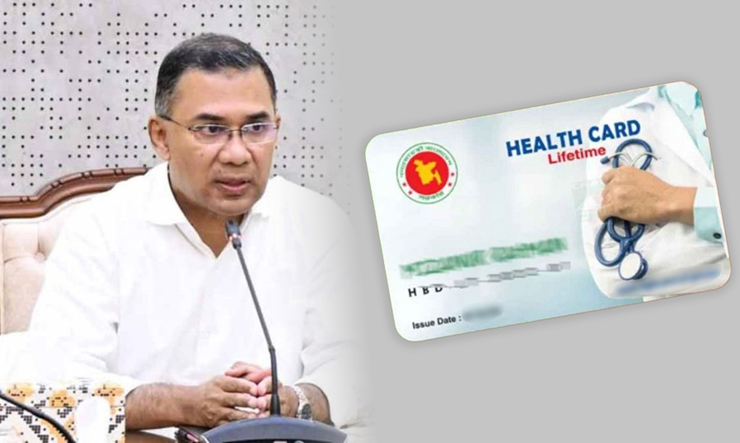

The government is preparing to introduce an ‘e-Health Card’ to transform the country’s healthcare sector into a modern and information-based system.
In a written reply to the parliament, Prime Minister Tarique Rahman said the government plans to implement the initiative under the 180-day priority programme, although the project is still awaiting final approval.
Member of Parliament Md. Responding to a question from Shamsur Rahman Shimul Biswas, the prime minister said the proposed ‘E-Health Card’ will make the citizens more disciplined and integrated healthcare. Through this card, patient medical information will be stored on a central digital platform, which will help doctors make quick decisions and increase transparency in healthcare.
According to the government’s plan, the service will be launched in Khulna, Noakhali, Bogra, Sirajganj and Narsingdi districts at an early stage. According to the sources, the results of the pilot project in these areas can be expanded across the country later. This card system, which is connected to electronic patient management, is expected to make it easier to set information-based policies in the health sector in the long term.
According to health policy analysts, such initiatives could lead to positive changes in preserving the patient’s medical history, reducing recurring tests and ensuring accountability in providing services. However, they also stressed the need for ensuring technical infrastructure, information security and field-level implementation capacity.
Replying to another question in Parliament, the Prime Minister said the government is working to improve the skills of teachers to improve primary education. Replying to a question from Hummam Quader Chowdhury, a member of parliament from Chittagong-7 constituency, he said there are plans to bring all primary school teachers under the special training programme, which will contribute to improving the quality of teaching.
Overall, the ‘E-Health Card’ initiative is not just an administrative project—but it is seen as a long-term strategy to improve the quality of civil service by bringing healthcare within a digital framework.