


In the wake of Nepal’s recent political upheaval, West Bengal Chief Minister and Trinamool Congress (TMC) leader Mamata Banerjee has struck a rare understanding with the BJP-led central government. Concerns over cross-border security risks following Nepal’s coup prompted this move, signaling a pause in the long-standing rivalry between the two sides.
The unrest stems from Nepal’s sudden shift in power after widespread youth-led protests toppled Prime Minister K. P. Sharma Oli’s government on September 11. The Nepalese army assumed control, installing former Chief Justice Sushila Karki as interim prime minister. However, instability persists, heightening fears of infiltration along the Siliguri corridor, where India shares a 100-kilometer border with Nepal.
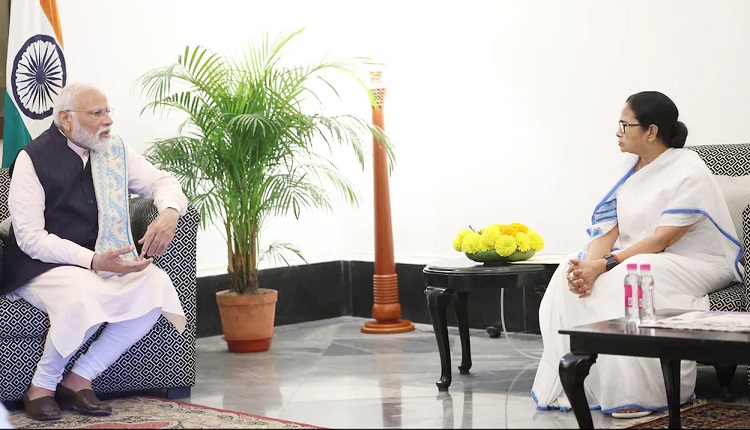
On Monday, Prime Minister Narendra Modi visited West Bengal and held talks with Mamata Banerjee in Kolkata. Speaking afterward, Mamata stressed, “This is a matter of national security. On issues of national interest and security, there are no conflicts between the BJP and Trinamool. We stand united.”
Intelligence agencies warn of potential infiltration and the spread of Maoist influence across the West Bengal-Nepal border, as Nepal still harbors several influential Naxalite-Maoist groups. With similar extremist elements banned in India, concerns are mounting about possible cross-border collaboration and political spillover.
The Modi-Mamata meeting produced two major outcomes: deployment of additional paramilitary forces, the Sashastra Seema Bal (SSB), alongside the Border Security Force (BSF) at the India-Nepal border, and an agreement to enhance intelligence sharing between the central and state governments. Both steps aim to bolster security along the volatile frontier.